
Blue Hydrangea Winter Expansion Correspondence Box Tutorial


You have handmade gifts to finish. Let the market paperwork and display details be the easy part. My Complete Christmas Market Vendor Guide brings together practical vendor advice, preparation checklists, booth signs and tags in a printable digital collection.
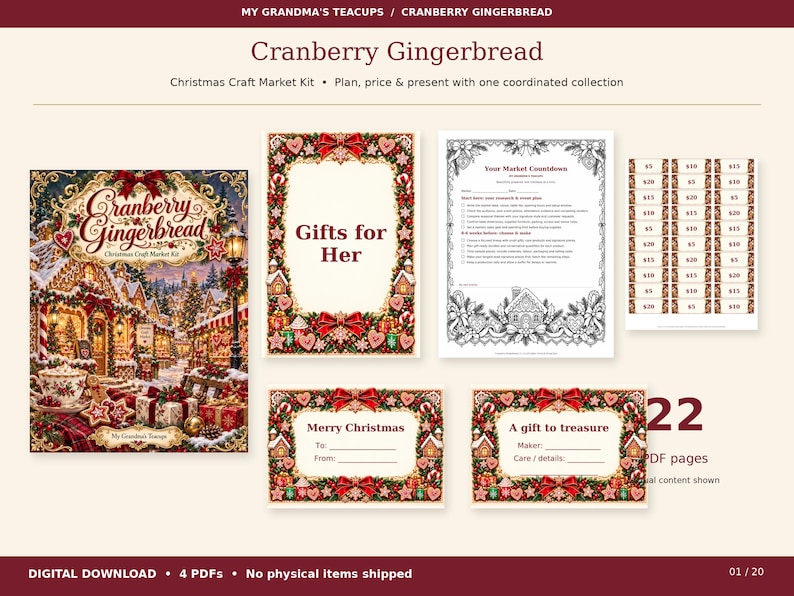
See the Christmas Market Kit on Etsy →
Digital download to print at home. View the listing images and full details before purchasing. Physical display props are not included.

If Christmas craft shows are on your calendar this year, now is the moment to start planning — not in October when the good booths are already booked and you're scrambling to print a sign. A little structure now saves you from the classic mistake so many of us have made: spending weeks making something beautiful that nobody at the show actually wants.
This is Part 1 of our Christmas craft show prep series, covering the groundwork: researching trends, deciding what to bring, mapping your booth, sorting out how you'll take payment, and choosing venues that are actually worth your table fee.
This post contains affiliate links. If you buy through them, I may earn a small commission at no extra cost to you.
It's tempting to dive straight into production mode, especially when you already have a signature style. But before you commit hours (and materials budget) to new stock, take time to look at what's actually selling this season.
The goal here isn't to copy anyone. It's to make sure the hours you invest go toward products people are actually hoping to find on the tables this year.
Once you have a feel for what's trending, it's time to get concrete. Craft shows reward focus — a table that's easy to shop tends to outsell a table trying to be everything to everyone.
Before show day, sketch out your booth. Literally draw it, even roughly. This is where a lot of vendors get caught out — realizing the morning of that they're missing a key piece of equipment.
Walking through your booth plan on paper now means you're not making a panicked last-minute run for a folding table the night before.
Get our free printable book tracker and sign up for new reading-journal layouts from My Grandma’s Teacups.
Get Free Journal LayoutsSign up on our Kit page. Unsubscribe at any time.
Cash-only tables leave money on the table — literally. Most shoppers expect to tap or swipe, especially for higher-ticket items.
Not all craft shows are created equal, and table fees can add up fast if you're picking events without foot traffic to back them up.
A little research here can be the difference between a show that covers its fee twice over and one that barely breaks even.
Once you've got your research, product lineup, booth plan, payment setup, and venue list locked in, the next step is turning all of that into a real production and marketing timeline — so stay tuned for Part 2, where we'll map out the countdown to show day.
Love cozy books and beautiful reading printables? Join the Cozy Bookish List for thoughtful recommendations, creative inspiration, subscriber-only savings and first looks at new collections.
Choose a design for your next personal craft, reading journal or handmade gift.
All products shown are digital downloads. Before selling finished crafts, check the individual listing’s licence and permitted uses.
Save this image for your next creative afternoon.


AI-created pin illustration accompanies this article; see the written guide for project details. Styled examples are not product listing photographs.
💛 You might also like:


Craft Fair Selling Guide
Tumblers can still be profitable craft-fair products—but attractive artwork alone is no longer enough to guarantee sales.
Tumblers remain popular at craft markets because they are practical, reusable, highly giftable and easy to personalize. Shoppers can buy one for a teacher, nurse, book lover, gardener, sports parent, bridal party member—or themselves.
That popularity has also made the category extremely competitive. At many craft fairs, customers will encounter several vendors offering customized drinkware. The question is no longer simply, “Do tumblers sell?” The better question is, “Why should a shopper choose this tumbler from this particular booth?”
If you are planning to add tumblers to your 2026 craft-market inventory, these ten considerations will help you create a collection that is distinctive, profitable and easy to shop.
The goal is not to bring the most tumblers. It is to bring the tumblers that the right customers will immediately want to take home.
A generic tumbler decorated with a common saying must compete with mass-produced drinkware, online marketplaces and other craft vendors. A niche design speaks directly to a recognizable customer.
Possible collections include:
Your ideal customer should be able to glance at a design and immediately think, “That was made for me.” A cohesive niche also makes your booth more memorable than a table filled with unrelated graphics.
The 20-ounce skinny tumbler remains a practical craft-market staple. It is portable, fits most vehicle cup holders and usually stays within a comfortable gift-buying price range.
Handled 30- and 40-ounce tumblers attract attention and can command higher prices, but they also cost more to stock and occupy considerably more display space. Rather than investing heavily in every style, test a small quantity and let actual customer behaviour guide future inventory.
Craft-market shoppers decide within seconds whether to slow down and examine a booth. Your tumbler designs must communicate clearly from several feet away—not only when viewed close-up on a computer screen.
Effective designs generally use:
Print a sample before producing a full batch. A detailed design that looks beautiful when flat can become confusing when curved around a narrow tumbler.
Your price must cover much more than the tumbler blank. Include the cost of ink, paper, vinyl or transfers, packaging, equipment wear, failed products, labour, booth fees and payment-processing charges.
| Product | Common Starting Range |
|---|---|
| 20 oz customized tumbler | $25–$35 USD / $30–$45 CAD |
| Premium or personalized 20 oz tumbler | Price above the basic range according to materials and labour |
| 30–40 oz handled tumbler | Higher than a 20 oz style due to blank cost and size |
These are broad 2026 market ranges, not fixed rules. Your actual price must reflect your region, workmanship, material quality and true costs. Always display prices clearly; many customers will walk away rather than ask.
A display containing dozens of unrelated designs can feel more like a clearance table than a thoughtfully curated handmade shop. Too many choices can also make it difficult for customers to decide.
Create three to five coordinated mini-collections and show a limited number from each. For a first event, bring conservative quantities and use the market to discover which themes, colours and sizes appeal to your local audience.
A name or short custom phrase can transform an attractive cup into a meaningful gift. However, personalization can also create delays, mistakes and confusing customer expectations if it is not carefully managed.
If you accept custom orders, prepare:
Keep the number of choices manageable. Customers are more likely to order when personalization feels easy and the finished result is predictable.
Tumblers arranged in one long row consume valuable table space and leave many designs below a shopper’s natural sightline. Use stable tiered shelves, risers or individual stands to create height.
Place your strongest products near eye level and leave enough room for customers to pick them up safely. Display stock should be stable, well lit and protected from being knocked over. Keep extra inventory behind or beneath the main display so the booth remains abundant without appearing crowded.
Your signs and product labels should answer common questions:
Include a care card with every purchase. Accurate care instructions help customers protect their tumblers and reduce preventable complaints.
Tumblers become more appealing when shoppers can picture them as complete gifts. Coordinated add-ons can increase the perceived value of the product and raise the average transaction amount.
Possible additions include:
Use simple bundle pricing and make the added value obvious. A shopper should be able to understand the offer without listening to a lengthy sales explanation.
Compliments are encouraging, but they are not the same as sales. Watch what customers actually do and record the results after every event.
Track:
A product that receives many compliments but no purchases may be visually interesting without being commercially strong. Treat every craft market as research for the next one.
Tumblers can still sell well at craft markets in 2026, but they are not an automatic bestseller. Successful vendors give customers a clear reason to choose their products: a recognizable niche, distinctive artwork, professional presentation, transparent pricing and an easy purchasing experience.
Don’t just sell a cup. Sell the perfect gift for a clearly defined customer.
Save the infographic to your craft-fair planning board so you can review these ten points while choosing inventory, setting prices and preparing your display.
Trend note: This article reflects 2026 handmade-market interest in expressive details, handcrafted texture, practical products and meaningful personalization. For additional marketplace context, see the Etsy Spring and Summer 2026 Seller Trend Report and Pinterest Predicts 2026.
We're looking for a small group of product testers who love printables, reading, and journaling. Try our digital collections free — just leave an honest review when you're done.
💛 You might also like: